
I realise this is not normally how one plans a birding trip.
Normally there are spreadsheets involved. Target lists. Google Maps pins. Six months of WhatsApp messages. Someone books accommodation. Someone books flights. Someone discovers, three days before departure, that the trailer’s licence disk expired in 2022.
But some of the best birding trips I’ve ever been on have started with a much simpler question: what are you doing next weekend? So, embracing this philosophy, I have a proposition for you: what are you doing 1–4 October? Because I’m going to Zululand. And I’d love for you to join me!
There is an ancient and special habitat in northern KZN that all birders revere: Sand Forest. It’s not a particularly easy habitat to explain. It grows on ancient dunes—old shorelines left behind as coastlines shifted over geological time. Increasingly isolated from the sea, these forests became ecological islands, rich in endemic species—from the Pygmy Wolf Snake to the jewel-like Phinda Button Spider, only discovered in 2019. So when you step into Sand Forest today, you’re effectively walking across an ancient beach. The Indian Ocean has long since departed. The forest stayed behind.
Nor, for that matter, is it always a particularly easy habitat in which to find birds. You step beneath the canopy and the outside world seems to disappear. The light changes. The air changes. Time seems to slow down. And somewhere, tantalisingly close, an Eastern Nicator starts gurgling from the thickets.
You peer into a wall of leaves. Nothing.
A Rudd’s Apalis joins in with its knocking notes. Still nothing.
Then a tiny shape darts across the path and vanishes into a thicket before your brain has had time to process it. Pink-throated Twinspot? Probably.
Welcome to Sand Forest.
And what a collection of birds it holds. In addition to the above, Gorgeous Bushshrike. African Broadbill. Narina Trogon. Green Malkoha. Southern Crested Guineafowl. African Wood Owl. These aren’t hypothetical birds from a regional checklist either. They’re among the specials recorded around Malkoha Lodge itself. And that’s where I’m heading.
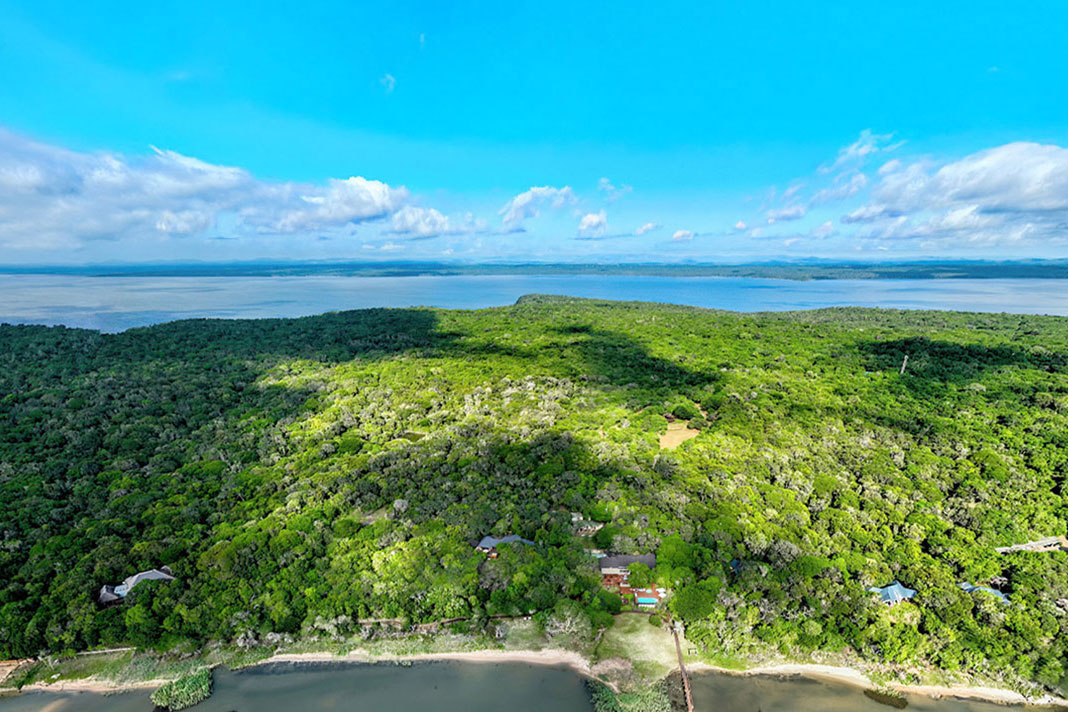
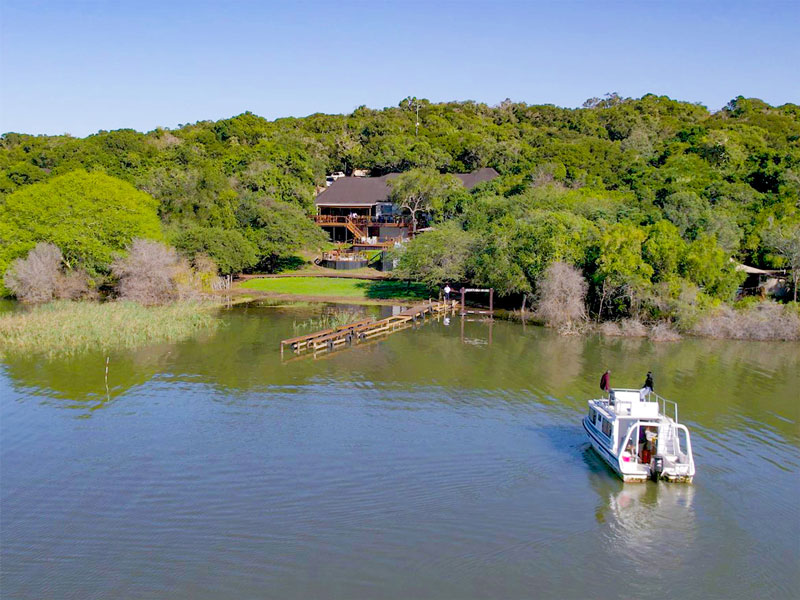
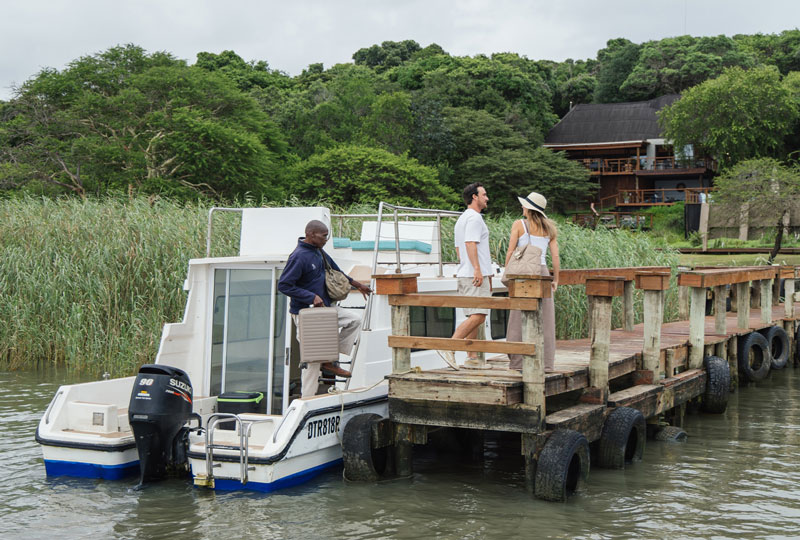
Malkoha sits on the Kwa-Nibela Peninsula, on the shores of Lake St Lucia. Getting there is half the fun. You leave your car behind at False Bay. Grab your bags and binoculars and get on a boat. For about 45 minutes you cross Lake St Lucia, watching the shoreline recede behind you until eventually you arrive at Malkoha’s jetty, with the lodge tucked away in the forest behind.
Frankly, I think all birding trips should start like this. There is something wonderfully decisive about leaving your car on the opposite side of a large body of water. You’re not popping down to Woolies because somebody forgot the rusks. You’re there now. And for three days, we’re going birding.
That’s really what this Dawn Chorus is about.
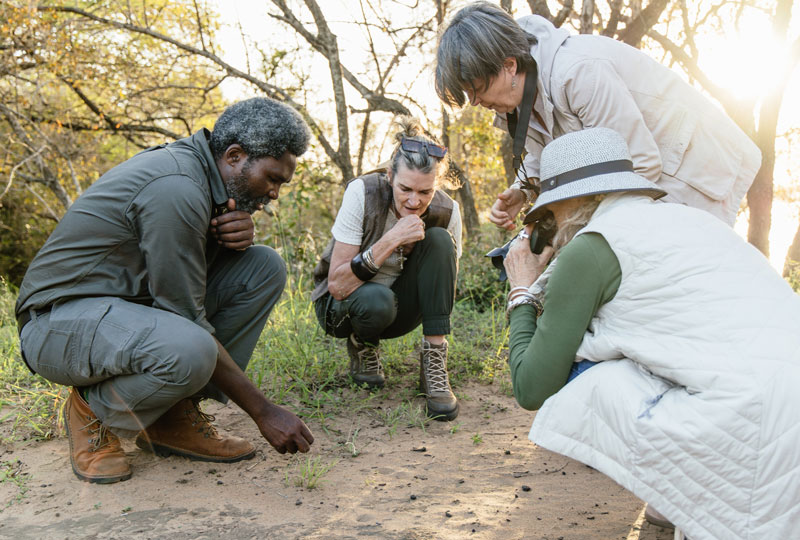
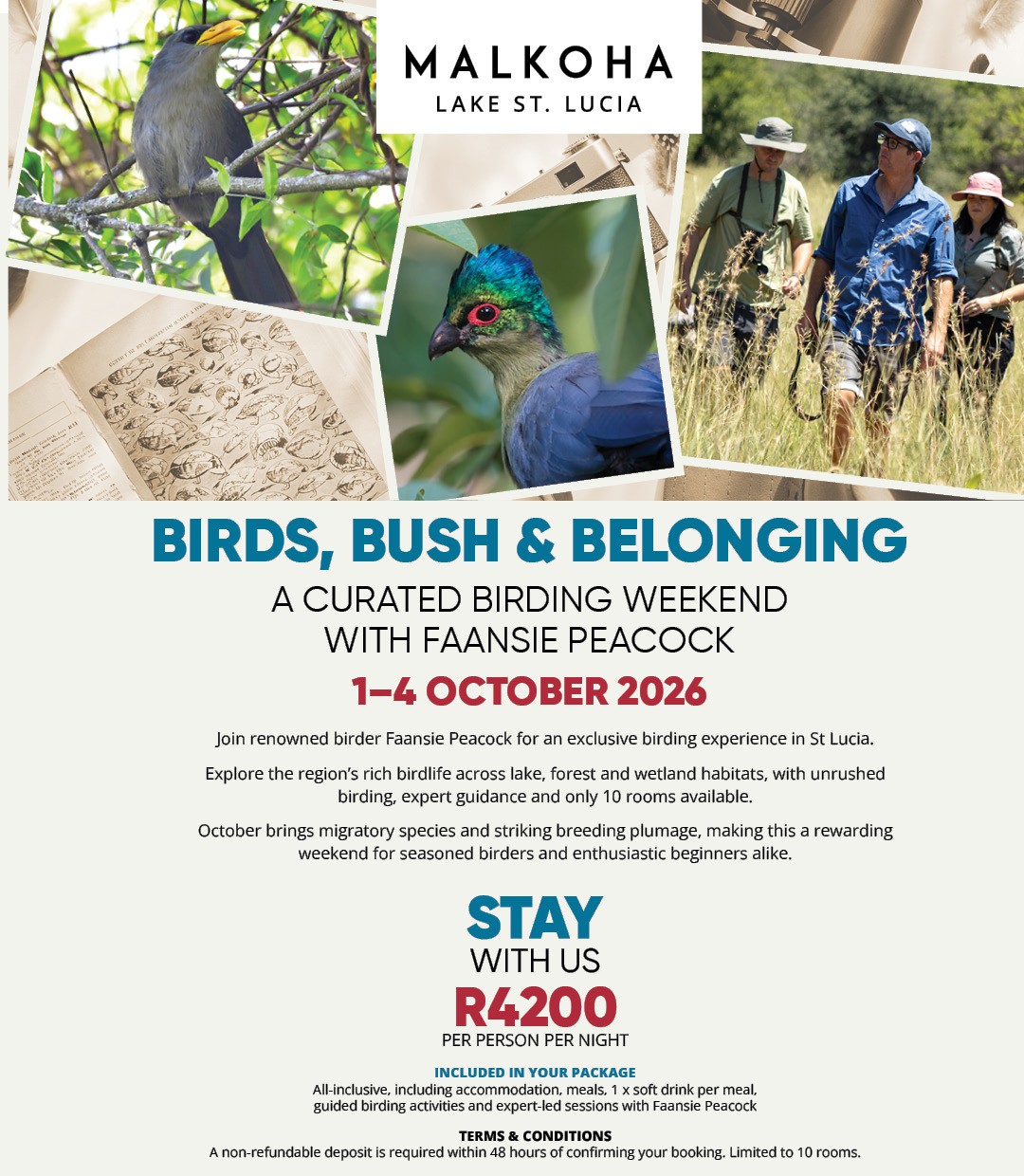
From 1–4 October I’m hosting a very small birding weekend at Dream Resorts’ Malkoha Lodge, and we’re limiting the whole thing to just ten rooms. This is by design. I’m not terribly interested in standing in front of a busload of people waving a laser pointer at a distant blob. I want us to bird properly. I want to stop and creep into the tangles to figure out that mystery call. I want us to spend twenty minutes trying to find the twinspot that everybody heard but only Brian saw. I want to change our plans because somebody found something interesting on the path to their chalet. I want beginners to be able to ask questions without feeling silly and experts to be able to argue about tertial fringes over dinner.
Mostly, I want us to have fun.
And early October is a wonderful time to do it. Summer is beginning to stir. Migrants are returning. Birds are slipping into breeding colours and breeding moods. Around us we’ll have Sand Forest, woodland, floodplains and one of Africa’s great wetland systems. In fact, the wider area holds well over 400 bird species.
And while I can’t promise you 400 species, I can guarantee that we’ll track down some exquisite ones. We’ll hunt for Rosy-throated Longclaws on the floodplain. We’ll listen for the flight calls of Lemon-breasted Canaries flitting among the ilala palms. And we’ll wake up to the reverberating wing-rattles of African Broadbills. And, because this is birding, almost certainly something that none of us expected. Those are usually the best ones.
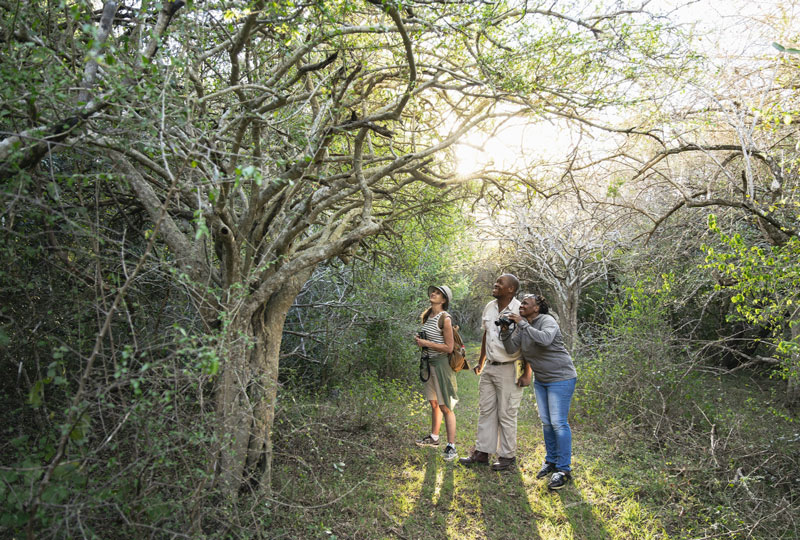
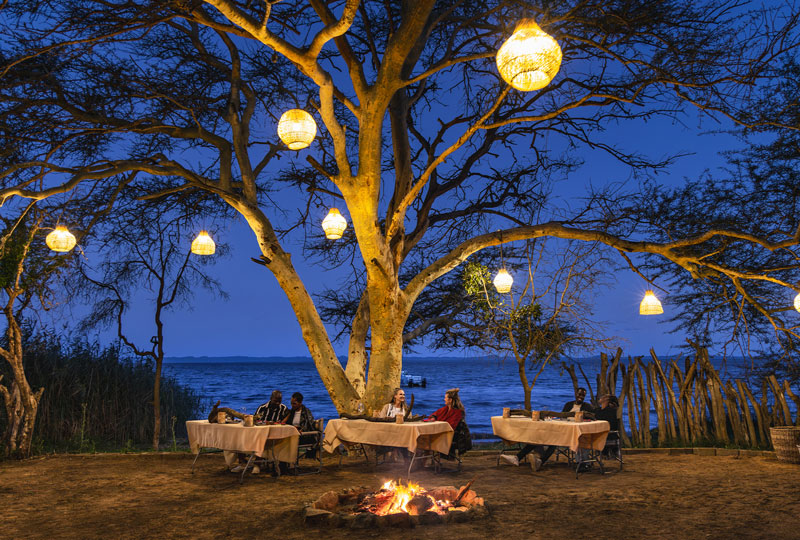
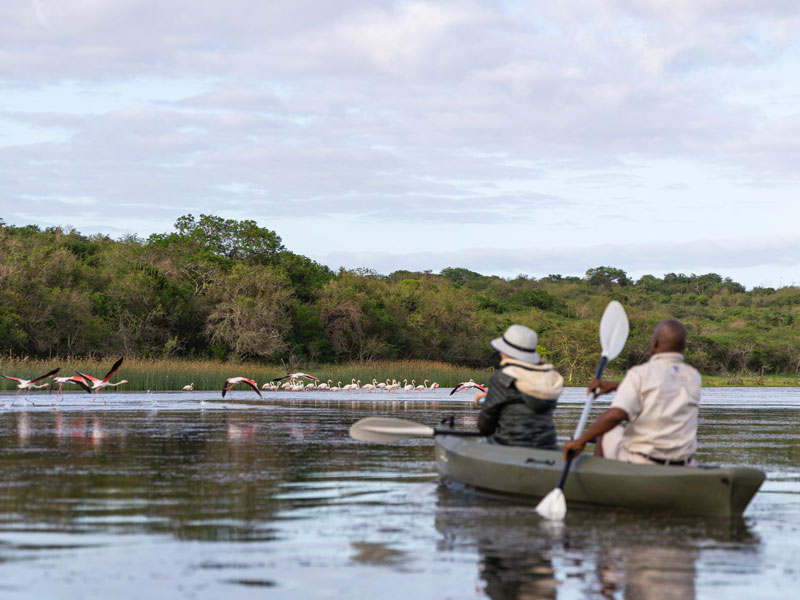
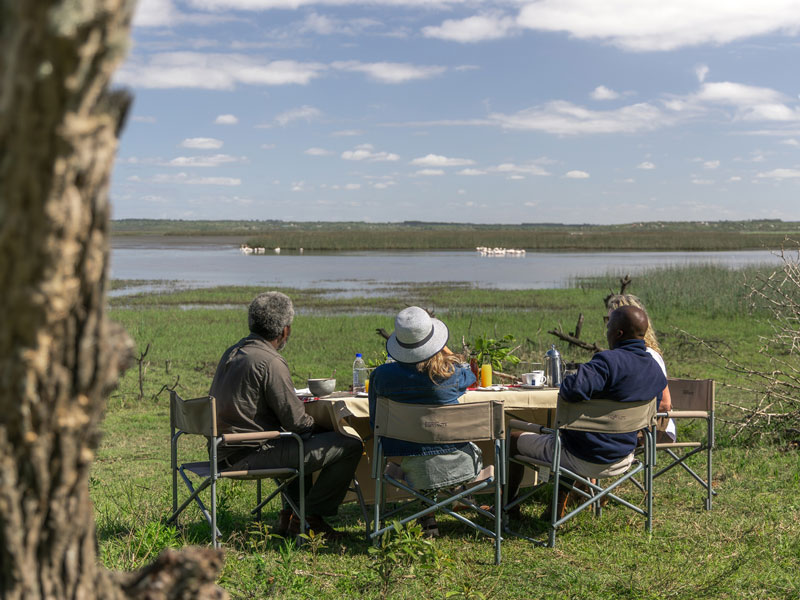
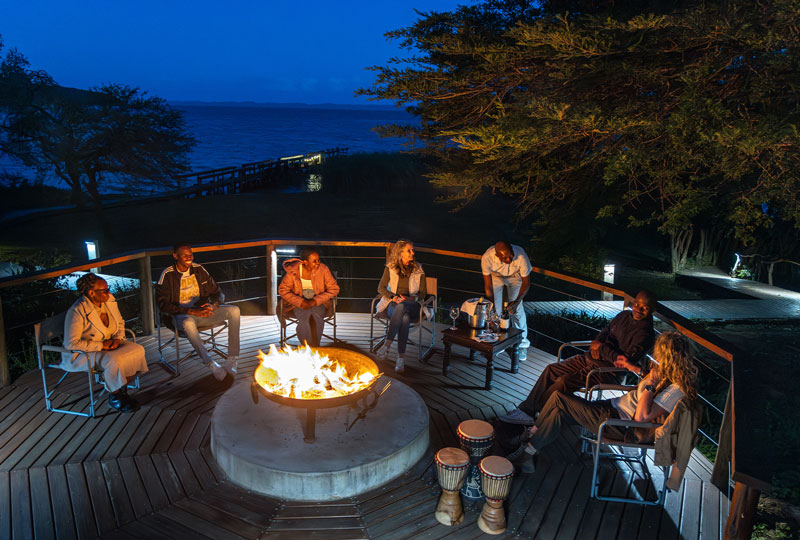
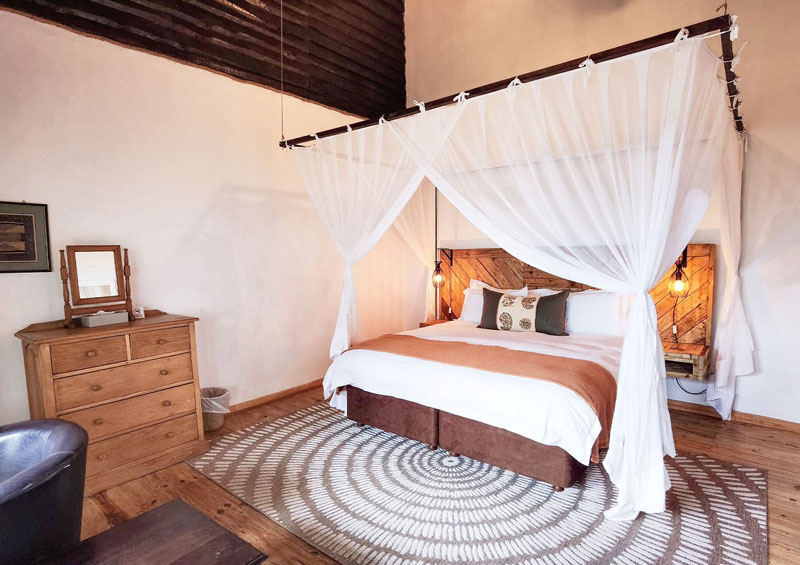
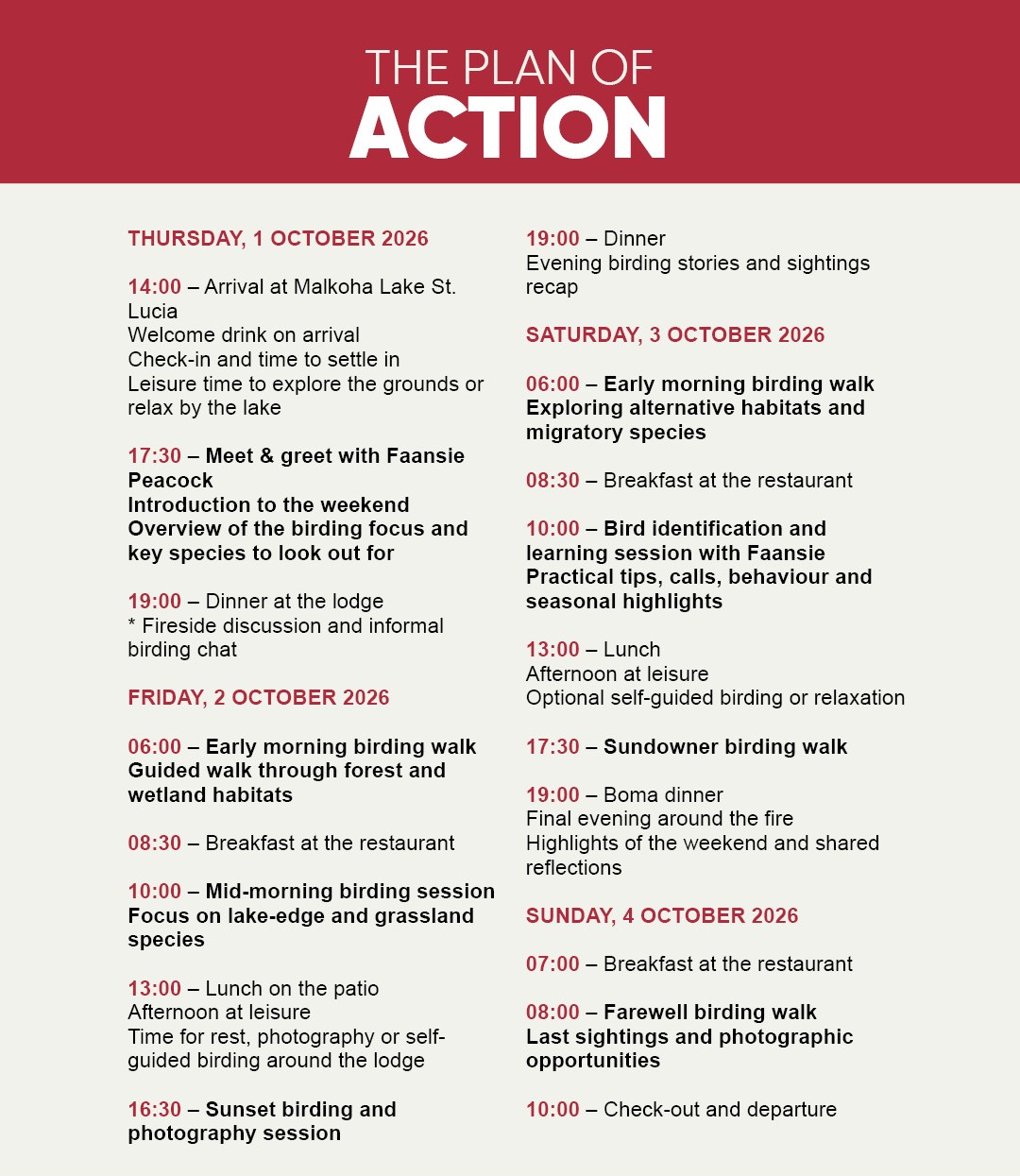
You don’t have to organise anything. This is an all-inclusive weekend. We sleep there. We eat there. We bird there. There will be guided birding activities and sessions together, and when we’re not chasing some obstinate little brown thing through a thicket there are decks overlooking the lake and forest, High Tea under the trees, boat trips, a boma and fires to sit around afterwards, going through the list and settling those back-of-camera questions.
In other words, you are permitted to bring a non-birding spouse. We will try not to frighten them. And if your personal definition of a successful birding day involves 11 straight hours in the field, two Simba chip packets and a lukewarm Coke, I suspect we can accommodate you too!
But now comes the catch: this is in two weeks. I know—ridiculously short notice. But if you’ve been staring at the calendar thinking that you desperately need a few days away… Or if a Pink-throated Twinspot has been glaring accusingly at you from an empty square on your life list… Or if the idea of disappearing into an ancient stranded forest for a few days sounds appealing… This is my belated invitation.
Remember, there are only ten rooms available. Perhaps one of them has your name on it. See you in the Sand Forest!

Here’s the details:
Bookings via the Dream Resorts (Malkoha) website, or email reservations@malkohalodge.co.za.


Leave A Comment