
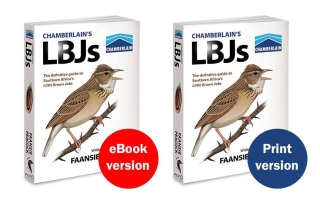
LBJs available again!
Some good news that a lot of birders (I hope) have been waiting to hear. My book, CHAMBERLAIN's LBJs, is now available again in print (as well as a downloadable eBook version). If you think I'm exaggerating when I say that LBJs are among our most spectacular, thrilling, interesting, sought-after and memorable birds, this book is just for you.
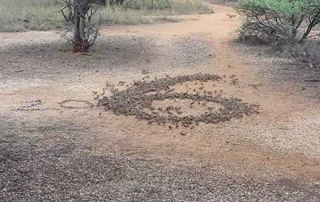
Fun with queleas
Africa's Red-billed Quelea is possibly the planet's most numerous bird species, with a global population of around 1.5 billion birds. Here are some videos to show what you can do with an abundance of queleas, a lot of bird seed and a little patience.
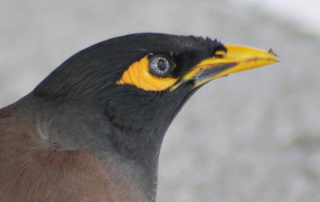
Recycling mynas
Am I the only birder who secretly likes mynas? Despite their bad reputation, you have to admire their tenacity and adaptability. This post solves a mystery that has intrigued me for several years, and highlights a behavioural quirk of mynas that actually contributes to environmental conservation. Recycling!
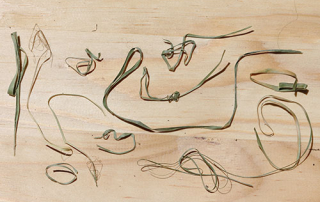
Avian Architects
How many palm strips does it take to build a weaver nest? Foolishly, I dedicated a morning of my life to determine the answer to this question. In the process I discovered some fascinating aspects of weaver life, and gained even more appreciation of these beautiful, talented and energetic birds. Guess the answer, before you continue!
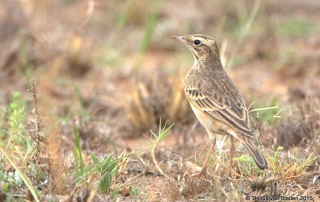
Mountain Pipits: A piece of the puzzle
Mountain Pipits are regarded as breeding summer visitors to the mountain kingdom of Lesotho, and the adjacent Drakensberg. But after years of research and atlasing, we still don't know where these enigmatic birds disappear to in winter. A recent sighting of a migrating party of Mountain Pipits at Ezemvelo, Gauteng provides at least one piece in the puzzle.
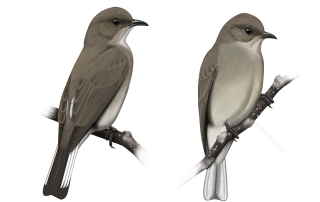


Curiouser and curiouser: Brown-backed Honeybird displays
Despite being the epitomy of the term LBJ, Brown-backed Honeybirds are fascinating and curious creatures: brood parasites that can digest waxy scale insects and establish their territories by incredible aerial maneuvers. But there is still a great deal that we don't know about these easily overlooked birds - hopefully my observation on previously undescribed courtship behaviour and calls can contribute one piece to the puzzle.